How to read a body lotion for Singapore conditions.
Not every body lotion performs the same way in every climate. A formula calibrated for a European winter — rich, slow-absorbing, built to hold against cold and wind — will sit heavy in Singapore's humidity and feel uncomfortable within an hour. A thin, water-heavy formula designed for an American summer will evaporate quickly and offer little to skin that has spent eight hours in recirculated air conditioning.
What Singapore skin is asking for sits in between: a lotion rich enough to nourish the barrier that the air conditioning slowly depletes, and light enough to absorb without residue in the moments before the day begins. Silicone, present in many widely sold body lotions as a texture agent, creates the sensation of softness without delivering nourishment — and builds up on the skin over days of use, leaving a film that can interfere with the barrier's own function.
The most useful thing to look for is not a marketing claim on the front of the bottle. It is the first five ingredients on the back. If the first entry is aqua and the second is a glycol, the formula is largely water with a preservative. If the first entry is a pressed botanical — a butter, an oil — the formula has something to offer the skin that water alone cannot.
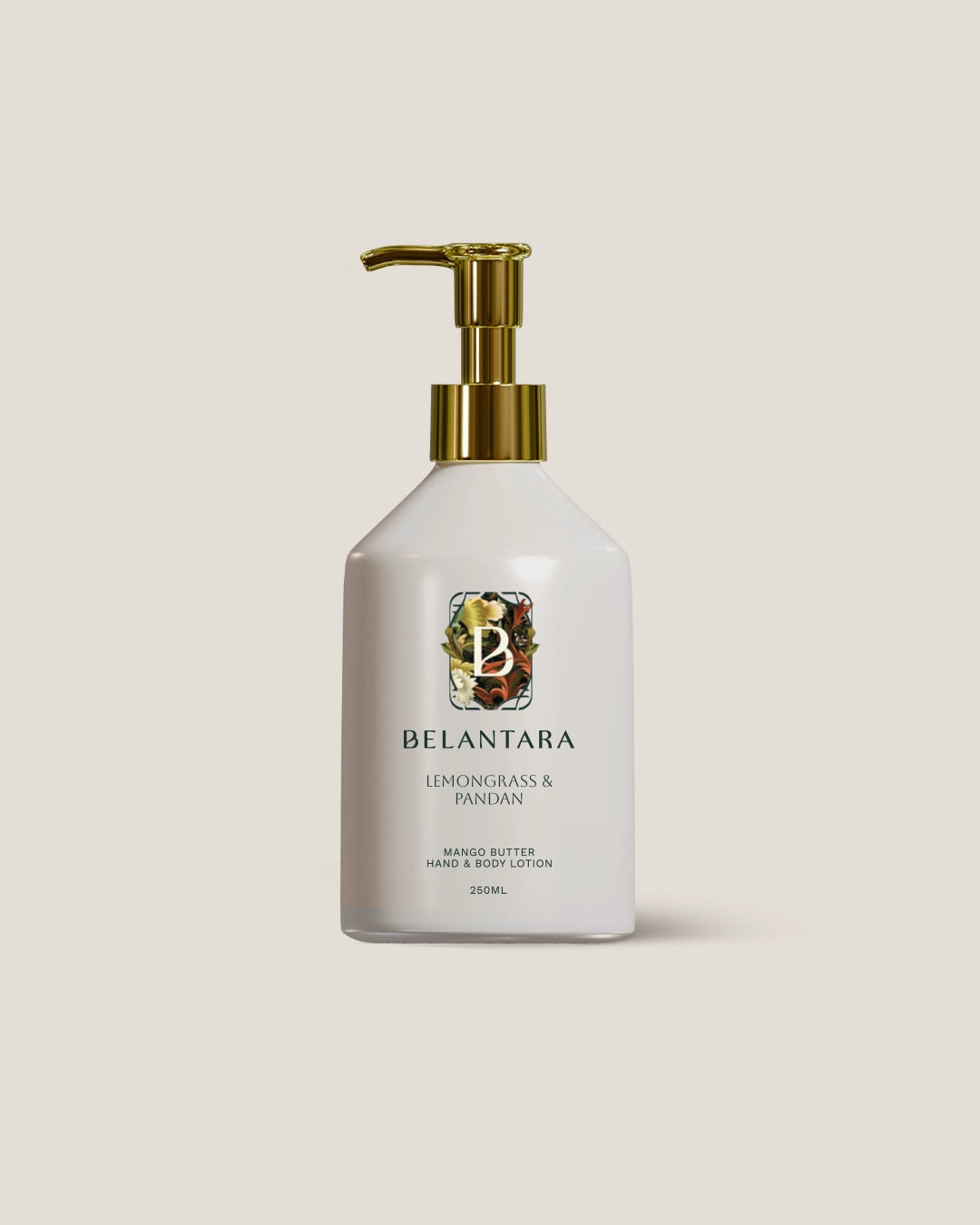
Mango butter, cold-pressed from the kernel the mango discards, is one of the few tropical botanicals that delivers the nourishing weight of a shea or cocoa butter with a lighter, quicker-absorbing finish. In Singapore's climate, that distinction is practical.